
How we test gaming desk mats
A desk mat is a simple object: a printed top, an edge, and a rubber base. What separates a keeper from a $12 regret is how each of those three holds up under your wrists and your mouse.

Marcus Vega · Setup Lead at Deskaru
Marcus has built and torn down more battlestations than he can count. He writes the Deskaru setup guides.
Our criteria
1. Size against your desk
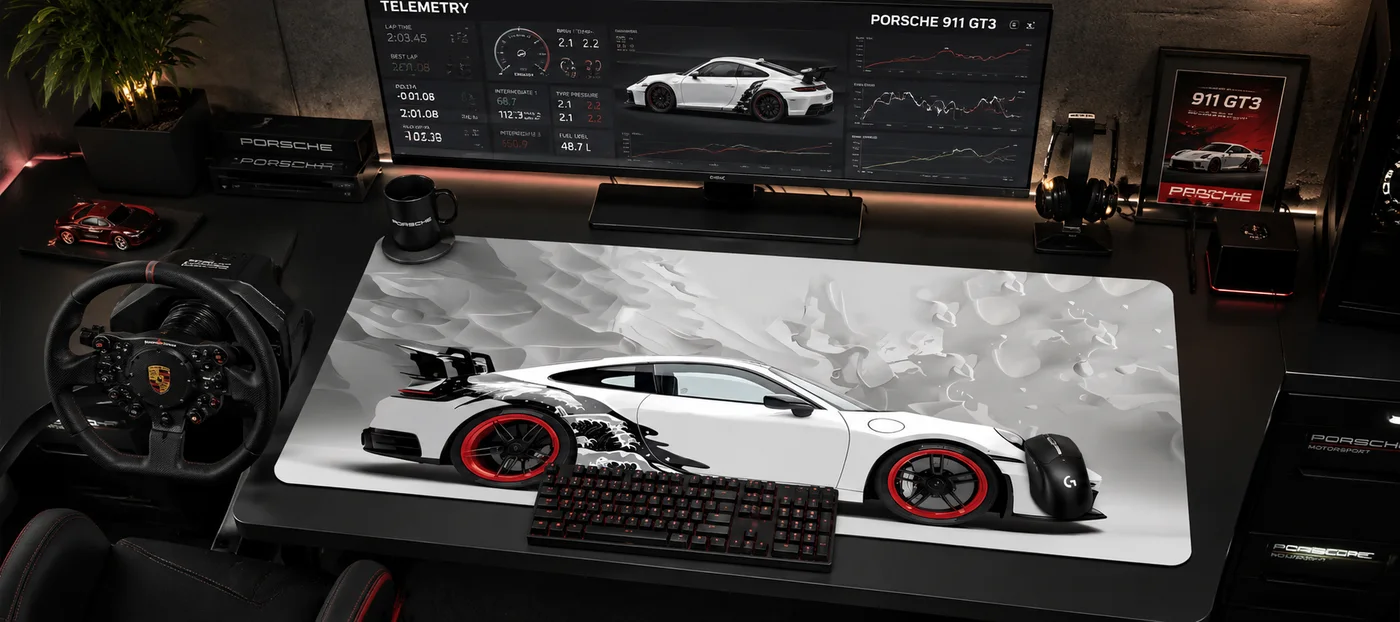
The Deskaru XXL mat is 36x16 inches (90x40 cm), about 7x the surface of a standard 10x8 inch pad: room for a full-size keyboard, the mouse, and the big arm swipes of low-sensitivity aim, with your wrists and forearms on the mat instead of the desk edge. Tape out the footprint on your desk first, as our size guide walks through.
2. The glide surface
The top is a fine-weave textile with an HD print, 2 mm thick. Cloth gives a mouse sensor one predictable texture across the whole surface, fast enough for big flicks and with enough resistance to stop where you meant to. PU leather is smoother and faster: better for writing than for aim. The full tradeoff is in our leather vs. cloth comparison, and the PU leather desk mat has its own page.
3. The edges
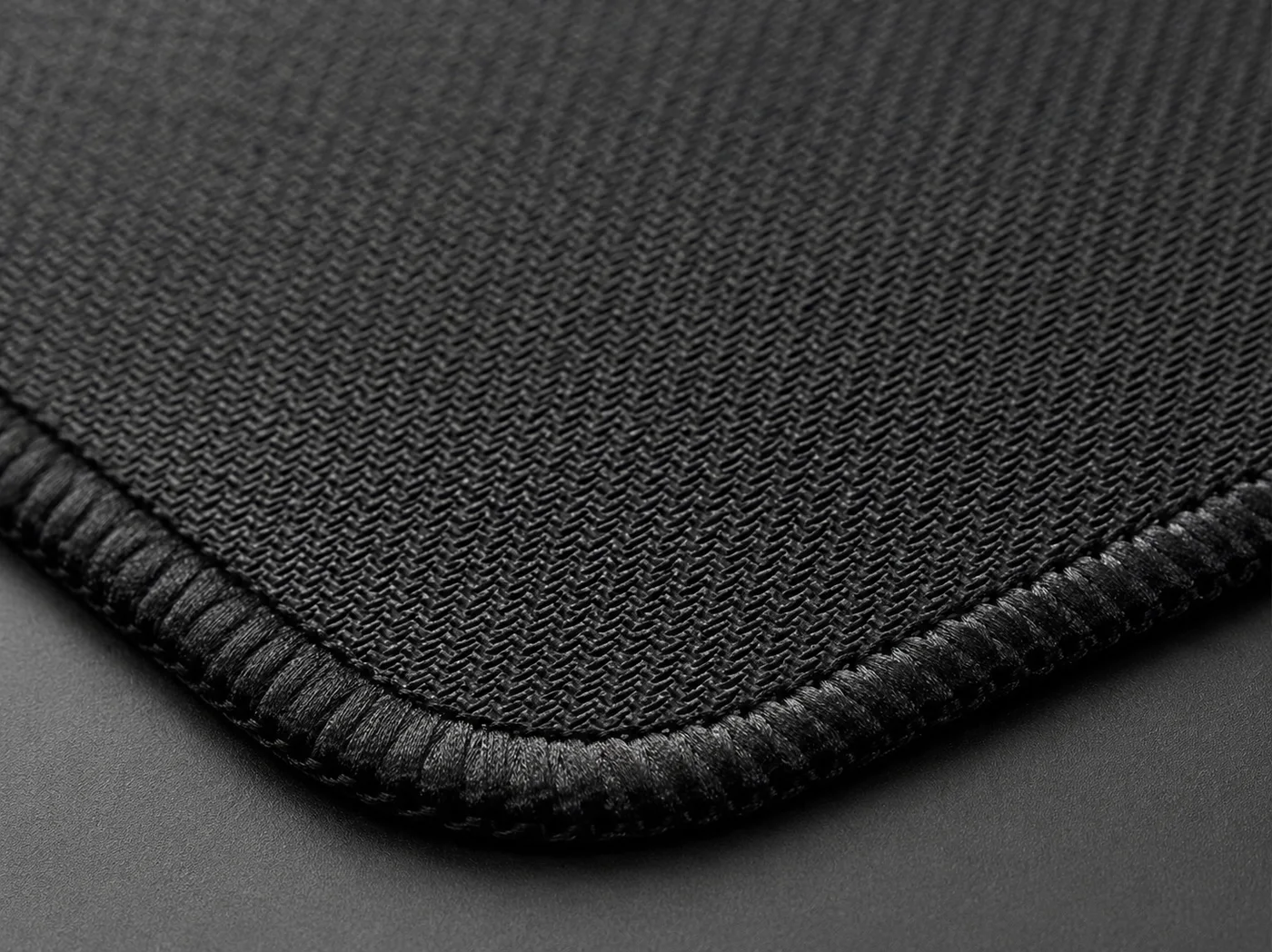
Stitched edges are the first thing to fail on a cheap mat and the first thing your wrist notices. Every Deskaru mat has reinforced stitched edges all the way around, including the custom desk mat, where the stitched border frames your own artwork.
4. The print
Fine linework and gold-on-black artwork show printing shortcuts first, which makes the Japanese collection the demanding case. Every design is printed in HD on the same base. On custom orders, a person reviews your file for resolution and framing and confirms the print with you before production starts.
5. Base grip
A non-slip base that creeps is half a product. The Deskaru mat sits on a textured non-slip rubber base, and a base that actually stays put is one of the things buyers mention most.
6. Care
Desk mats live next to drinks. Brush crumbs off, wipe spills with a damp cloth and a drop of mild soap, and air-dry the mat flat. No machine washing, no dryer. The PU leather mat is water-resistant and wipes clean with a damp cloth.
The criteria at a glance
| Criterion | What to look for | Deskaru XXL |
|---|---|---|
| Size | Keyboard, mouse and arm swipes on one surface | 36x16 in (90x40 cm), about 7x a 10x8 inch pad |
| Glide | One consistent texture across the whole surface | Fine-weave textile, HD print, 2 mm |
| Edges | Stitched, no ridge under the wrist | Reinforced stitched edges all the way around |
| Sharp linework, colors true to the design | HD print; custom files confirmed with you before production | |
| Base grip | Stays planted through a full session | Textured non-slip rubber |
| Care | Cleans without curling | Damp cloth, mild soap, air-dry flat |
What buyers report
The Deskaru range carries a 4.9 out of 5 average across 18 verified buyer reviews. The same things come up again and again: stitched edges with no loose threads, a non-slip rubber base that stays put, smooth and consistent glide across the whole surface, and mats that arrive rolled and flatten out without creases or a strong smell. Read them, 4-star reviews included, on the reviews page.
average rating across 18 verified buyer reviews on the Deskaru mat range
— Verified buyer feedback, 2026
What this changes for you
You get the size, the materials and the care routine up front, on every one of the 18 designs: 36x16 inches of usable surface, 2 mm of cushioning, stitched edges all the way around, HD print and a non-slip base, for $39.95 instead of $59.95. Every order ships free and carries a 30-day money-back guarantee with no restocking fee.
Marcus's take: two failures put a desk mat in the trash — edges that fray into a ridge under your wrist, and a base that creeps until you're squaring the mat between every match. Print saturation is a taste debate; a fraying edge is not.
Desk mat FAQ
Is the base the same on all 18 designs?
Yes. Every design prints on the same 36x16 inch, 2 mm, stitched-edge, non-slip base, so glide, edges and grip are the same across the range. Only the artwork changes.
Which specs apply to every mat?
36x16 inches of surface, 2 mm thickness, stitched edges on all four sides, HD print and a non-slip base, on every design in the range.
What if my mat doesn't hold up on my desk?
Then you're covered. Every order carries a 30-day money-back guarantee with no restocking fee: reach out through the contact page with your order number and a photo, and we'll replace it or refund you.
$39.95 (was $59.95) · Free shipping, 6-10 business days · 30-day money-back guarantee · Secure Stripe checkout.
The design you pick on the product page goes with your order and is shown again at secure checkout.